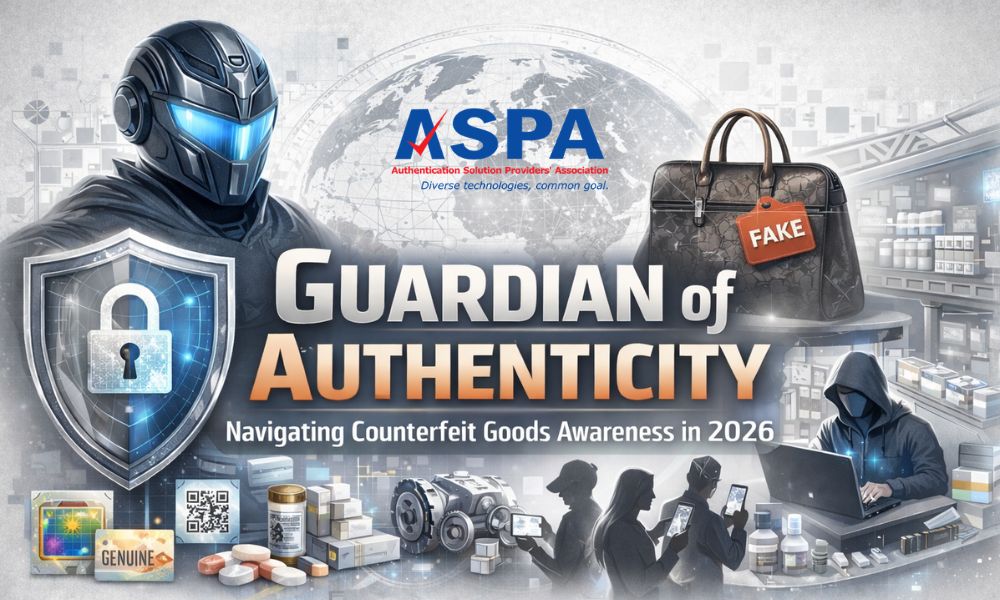
The battle against illicit trade has reached a critical turning point as we move deeper into the decade. Counterfeit Goods Awareness is no longer just a niche concern for luxury brands; it is a fundamental pillar of consumer safety and global economic stability. In 2026, the complexity of the “shadow economy” has evolved, forcing organizations like ASPA Global (Authentication Solution Providers’ Association) to lead the charge in educating the public and empowering industries. As fakes become indistinguishable from the real thing, understanding the risks and the technology behind authentication is the only way to protect your wallet and your well-being.
Why Are Counterfeit Goods Becoming Harder to Detect in 2026?
The era of “obvious fakes” with misspelled brand names and flimsy plastic is largely over. Today, we are facing the rise of “super-fakes.” Several factors have converged to make detection a massive challenge for both customs officials and average shoppers:
- Precision Manufacturing: Counterfeiters now use the same high-grade machinery and raw materials as legitimate factories, often operating in the same industrial hubs.
- Advanced Digital Printing: High-resolution 3D printing and digital imaging allow criminals to replicate intricate holographic features and textures with terrifying accuracy.
- AI-Enhanced Deception: Criminal networks use AI to analyze brand protection patterns, allowing them to iterate and “patch” their fake designs faster than brands can update their security.
- The E-commerce Blind Spot: With the explosion of social commerce and dark-web marketplaces, products are shipped in small individual parcels, making it nearly impossible for authorities to inspect every “gift” crossing the border.
How Are Counterfeit Goods Damaging Brand Trust Worldwide?
Brand trust is the most fragile asset a company owns. When a consumer unknowingly buys a fake product that fails or causes harm, they rarely blame the invisible counterfeiter—they blame the logo on the box.
- Erosion of Loyalty: Research shows that over 58% of consumers who have a bad experience with a counterfeit product will never buy from the original brand again.
- The “Quality Halo” Decay: If a market is flooded with fakes, the perceived exclusivity and quality of the genuine brand diminish.
- Safety Recalls and Liability: In sectors like pharmaceuticals or automotive parts, a single fake component can lead to catastrophic failure. Brands often face unfair legal scrutiny and PR nightmares due to products they didn’t even manufacture.
Can QR Codes and Smart Labels Really Stop Counterfeit Goods?
Technology is the best weapon we have, but it is not a “silver bullet” unless used correctly. In 2026, the focus has shifted from static labels to “Phygital” (Physical + Digital) solutions.
ASPA Global Insight: As a leading non-profit organization dedicated to authentication, ASPA Global emphasizes that a single security feature is easily copied. The future lies in multi-layered protection.
The Modern Anti-Counterfeit Toolkit:
- Secure Dynamic QR Codes: Unlike standard QR codes, these are encrypted and serialized. Every scan is tracked in real-time, allowing brands to see if a “unique” code is being scanned in multiple cities simultaneously—a clear sign of cloning.
- Smart Labels (NFC/RFID): These labels contain tiny chips that can be “tapped” by a smartphone. They provide an uncopyable digital signature that confirms the product’s journey from the factory to your hand.
- Digital Product Passports (DPP): Mandatory in many regions by 2026, these provide a transparent digital history of the product, including its origin and sustainability credentials.
How Do Counterfeit Goods Impact the Global Economy?
The cost of fakes is measured in more than just lost sales. It is a systemic drain on global progress.
| Economic Impact Area | Consequence in 2026 |
| Lost Tax Revenue | Governments lose billions in VAT and corporate taxes, reducing funding for schools and roads. |
| Job Displacement | Legitimate businesses forced to downsize due to “unfair competition” from tax-evading criminals. |
| R&D Stagnation | When intellectual property isn’t protected, companies have less incentive to innovate in medicine or tech. |
| Funding Organized Crime | Profits from counterfeit goods are frequently linked to human trafficking and other illicit activities. |
Fake or Real: Does It Really Matter?
Some consumers argue that “it’s just a cheap bag” or “a cheaper charger,” but the reality is much darker. Counterfeit Goods Awareness highlights that there is no such thing as a victimless crime in this industry.
- Human Cost: Counterfeit production often happens in unregulated environments using forced or child labor.
- Environmental Impact: Fake goods are made without environmental oversight, often using toxic dyes and chemicals that pollutes local water supplies.
- Your Safety: A fake skin cream might contain mercury; a fake brake pad might fail at high speeds; a fake pill might contain nothing but chalk—or worse, poison.
The Role of ASPA Global in 2026
The Authentication Solution Providers’ Association (ASPA) serves as a global lighthouse for integrity. By bringing together the world’s leading security experts, ASPA Global works on:
- Advocacy: Pushing for stricter IP laws and enforcement at the government level.
- Innovation: Helping brands adopt the latest phygital security measures to stay one step ahead of “super-fakers.”
- Education: Creating awareness campaigns so that you, the consumer, know how to spot the red flags before clicking “Buy Now.”
Summary Point: How to Stay Safe
- Check the Price: If it’s too good to be true, it almost certainly is.
- Inspect the Packaging: Look for the smart labels and holograms promoted by ASPA-aligned providers.
- Verify the Seller: Only buy from authorized retailers or official brand websites.
- Scan the Code: Use your smartphone to verify the digital footprint of your purchase.
Authenticity is the foundation of a healthy global market. By staying informed and demanding verified products, we can dismantle the criminal networks that thrive on deception.
 Counterfeit Goods Awareness | ASPA Global